 WhatsApp Us (24/7)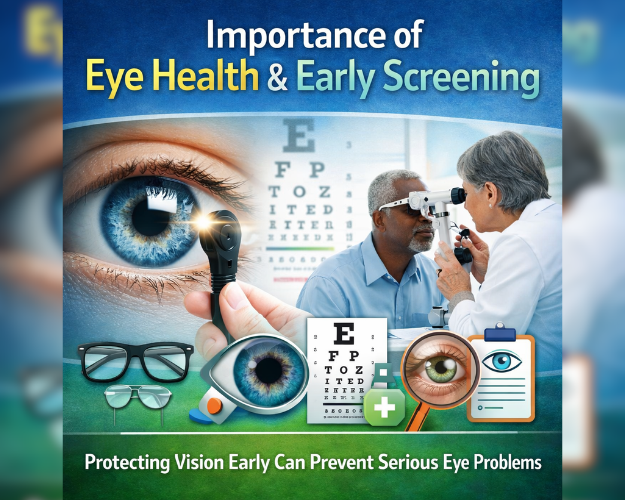
Importance of Eye Health & Early Screening
Mar 25, 2026Our fast-paced lifestyles usually focus on nutritional support and physical fitness, but people often overlook their sight—the most important thing we possess—until they have a problem. Our eyes are not simply the windows through which we view the world; they are actually complex biological systems that require regular maintenance in order to perform at their optimum level. Here at ITM Hospital and Research Centre, we understand that healthy eyesight is essential for a good quality of life, however there are many eye disorders that develop without warning and exhibit no symptoms until the damage is irreversible. Realising the significance of eye health and the transformative power of early detection screenings is the first action you can take to protect your eyesight over the coming years.
About Eye Checkup
An extensive eye examination is not just a simple test to find out if you need eyeglasses; instead, it is an extensive examination of your eyes and vision at a specialized health facility such as ITM Hospital. For example, a simple "vision screening" will only show you if you can read the letters on a chart. However, a full ophthalmological exam includes an in-depth analysis of both the external and internal structures of the eyes. During the professional examination process, the specialists will utilize advanced diagnostic equipment that allows them to evaluate the overall health of your retina, the intraocular pressure of your eyes, and the coordination of all of the muscles associated with your eyes.
The process typically will involve the use of special eye drops used for dilation of the pupils so that the doctor can get a complete view of the optic nerves and the blood vessels located at the back of the eye. The optics of the eyes have the ability to provide a doctor with the only way to observe blood vessels and nerves in the human body in a living state without having to perform surgery; therefore, these types of examinations are often used as early warning systems for the detection of systemic health problems. By observing the small blood vessels in your retina, the specialists may sometimes be able to detect the early development of elevated blood pressure, diabetes or even elevated cholesterol prior to these conditions being diagnosed through traditional blood tests.
Common Eye Issues
In order to avoid blindness or vision loss from several common eye conditions, early treatment is crucial:
The most common cause of vision loss is cataracts, which obscure the lens.
The blood vessels at the rear of the eye are harmed by diabetic retinopathy. It is the most common cause of blindness among adult Americans. One of the most avoidable causes of blindness and visual loss is diabetic retinopathy. Ninety percent of diabetics can avoid or postpone blindness from diabetic retinopathy with early identification and treatment. Additionally, diabetes can raise the risk of glaucoma and cataracts, among other eye conditions.
A collection of conditions that harm the visual nerve is known as glaucoma.
Light-sensitive tissue in the eye gradually deteriorates due to age-related macular degeneration.
Start Early
It is common for children not to know what "normal" vision looks like and to report few, if any, vision problems. Children with many conditions affecting the development of their vision, such as amblyopia (lazy eye) and strabismus (crossed eye), can be most successfully treated if the condition is found during the "critical period" of visual development. This critical time normally occurs prior to 7 years of age; if a child has an untreated vision problem during this time, their brain may learn to ignore signals from one eye, causing them to suffer from permanent low vision that will not improve with glasses as adults.
Children with uncorrected vision problems may have difficulty reading and following along in classrooms or they may lose their place easily or they may be diagnosed with a learning disability or a behavioral disorder. Therefore, ensuring that you have your child's eyes professionally examined prior to entering school provides them with the best opportunity for success.
How Frequently Should Eye Examinations Be Performed?
How often you should have your eyes examined will depend mostly on your current age and risk factors associated with your health as well as any previous medical problems. For infants, the first eye examination should occur when they are a year old at the latest, to check for congenital problems. Children are recommended to have an eye examination at age three and before starting first grade; there are usually recommended eye examinations for school-age children every one to two years. Children can experience rapid changes in their eyesight during periods of growth due to changes in their eye's length, and often will develop nearsightedness (myopia) during this time.
For healthy adults from ages 18-40, routine eye examinations every other year are recommended, assuming that there are no current vision problems. Adults over age 40 have an increased chance of developing age-related eye conditions such as presbyopia (difficulty focusing on objects up close) and cataracts, and therefore should have their eyes examined every one to two years; those over age 60 should have routine eye examinations on an annual basis to monitor for glaucoma and macular degeneration. Anyone with diabetes, high blood pressure, or a family history of eye disease should see an eye care provider according to the frequency recommended by that eye care provider.
|
Age Group |
Recommended Frequency |
Key Focus |
|
Infants (0-2 years) |
Once between 6-12 months |
Developmental milestones & congenital issues |
|
Children (3-18 years) |
At age 3, age 5, then every 1-2 years |
Learning-related vision & myopia control |
|
Adults (19-40 years) |
Every 2 years |
Digital eye strain & refractive stability |
|
Adults (41-60 years) |
Every 1-2 years |
Presbyopia & early signs of chronic disease |
|
Seniors (61+ years) |
Annually |
Cataracts, Glaucoma, & Macular Health |
Other Reasons to See an Ophthalmologist
Having regular eye exams is important; however, there are some instances where you need to seek the immediate attention of a qualified professional. For instance, one symptom to be aware of is the sudden development of floaters (little spots or strings that seem to float across your vision) along with flashes of light. These floaters and flashes of light may indicate that there has been a tear in your retina or separation of the retina, which is a medical emergency that needs to be addressed right away with surgery or you will lose your vision permanently. In addition, if you experience sudden blurry vision or a curtain coming down over your line of sight, you should not ignore these symptoms.
Another indicator to look for that requires immediate attention is pain in your eyes. If you are experiencing continuous or increasing pain in your eyes, along with extreme sensitivity to light and a redness that does not go away after 24 hours, it could be due to a serious infection or internal inflammation of the eye (uveitis) and could potentially damage your eye's structure. If you have chronic headache pain, double vision and/or extreme difficulty seeing at night, there may be something wrong with your eyesight. Although you recently had a routine check-up, if you notice any of these acute symptoms you should make an appointment with an ophthalmologist immediately to rule out any serious underlying conditions.
What You Can Do
Having regular eye exams is important; however, there are some instances where you need to seek the immediate attention of a qualified professional at ITM Hospital. For instance, one symptom to be aware of is the sudden development of floaters (little spots or strings that seem to float across your vision) along with flashes of light. These floaters and flashes of light may indicate that there has been a tear in your retina or separation of the retina, which is a medical emergency that needs to be addressed right away with surgery or you will lose your vision permanently. In addition, if you experience sudden blurry vision or a curtain coming down over your line of sight, you should not ignore these symptoms.
Another indicator to look for that requires immediate attention is pain in your eyes. If you are experiencing continuous or increasing pain in your eyes, along with extreme sensitivity to light and a redness that does not go away after 24 hours, it could be due to a serious infection or internal inflammation of the eye (uveitis) and could potentially damage your eye's structure. If you have chronic headache pain, double vision and/or extreme difficulty seeing at night, there may be something wrong with your eyesight. Although you recently had a routine check-up, if you notice any of these acute symptoms you should make an appointment with an ophthalmologist immediately to rule out any serious underlying conditions.

