 WhatsApp Us (24/7)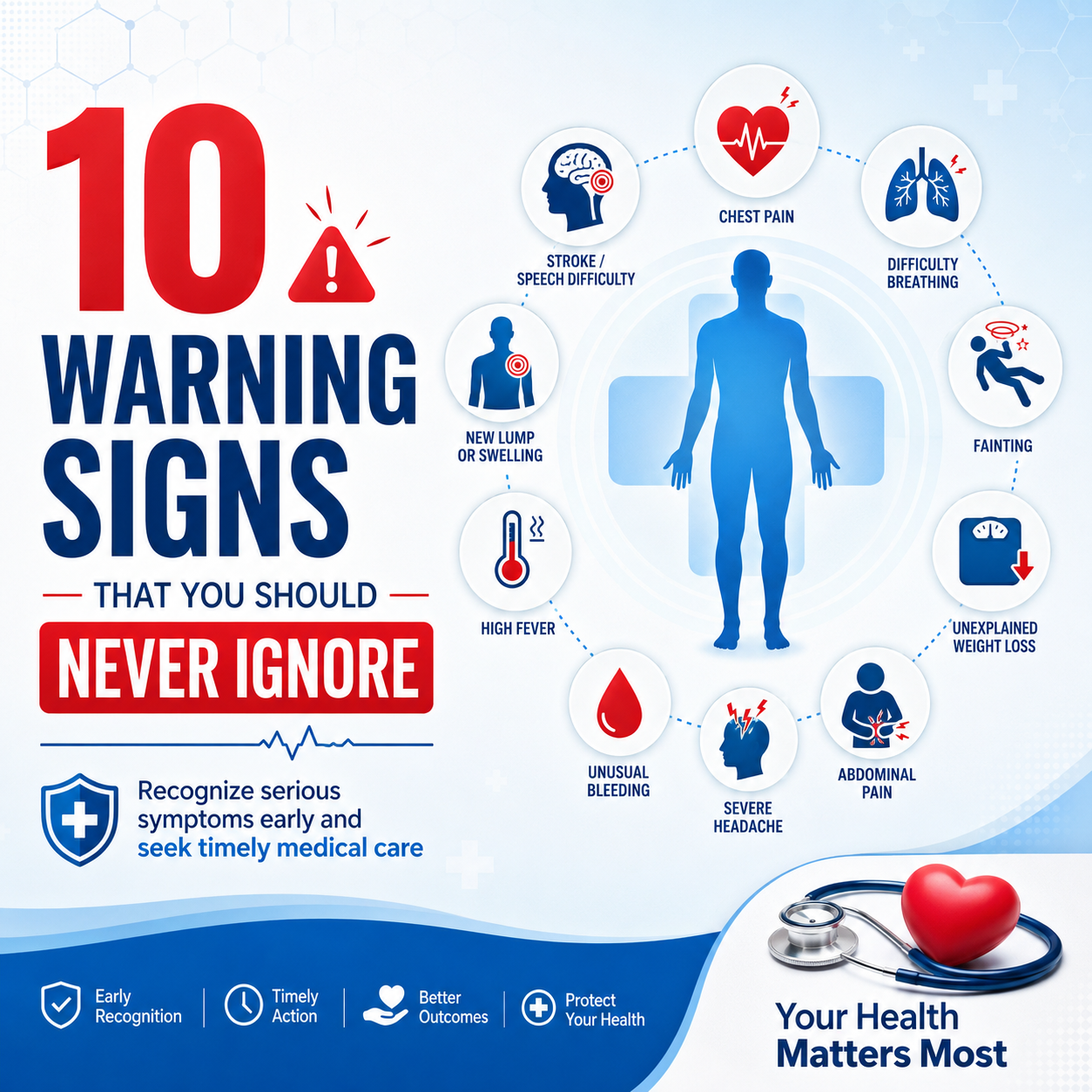
10 Warning Signs You Should Never Ignore
Aug 19, 2026Your body often gives you warning signals when something isn’t right. Some symptoms may be temporary or harmless, but certain signs can indicate a potentially serious medical condition and should never be ignored.
Recognizing unusual symptoms early and seeking timely medical attention can help with early diagnosis, appropriate treatment, and better health outcomes.
Here are 10 important warning signs that deserve medical attention.
1. Sudden or Severe Chest Pain
Chest pain, pressure, tightness, heaviness, or discomfort—especially if it spreads to the arm, shoulder, back, neck, or jaw—may be associated with a serious heart-related problem.
Other symptoms may include:
a. Shortness of breath
b. Cold sweating
c. Nausea or vomiting
d. Dizziness
e. Unusual weakness or fatigue
What should you do?
New, severe, or unexplained chest pain should be treated as a medical emergency. Seek emergency medical care immediately.
2. Sudden Difficulty Speaking or Moving
Sudden weakness or numbness of the face, arm, or leg—particularly on one side of the body—may be a warning sign of a stroke.
Other possible symptoms include:
a. Difficulty speaking or understanding speech
b. Sudden vision changes
c. Loss of balance or coordination
d. Sudden severe headache
e. Confusion
Remember FAST
F – Face: Does one side of the face droop?
A – Arms: Is one arm weak or numb?
S – Speech: Is speech unclear or difficult?
T – Time: Seek emergency medical help immediately.
Early medical treatment can be extremely important in cases of suspected stroke.
3. Difficulty Breathing
Unexpected or severe shortness of breath should not be ignored.
Breathing difficulty can occur with several conditions affecting the heart or lungs, including:
a. Asthma
b. Pneumonia
c. Severe allergic reactions
d. Pulmonary embolism
e. Heart-related conditions
Seek emergency medical attention if breathing difficulty:
a. Starts suddenly
b. Becomes severe
c. Occurs with chest pain
d. Causes bluish lips or skin
e. Is associated with confusion
f. Causes fainting or loss of consciousness
4. Sudden Loss of Consciousness or Fainting
Fainting can sometimes occur because of dehydration, low blood pressure, overheating, or other relatively minor causes.
However, unexplained, repeated, or sudden loss of consciousness should be medically evaluated.
Seek urgent medical care if fainting occurs with:
a. Chest pain
b. Palpitations
c. Difficulty breathing
d. Severe headache
e. Injury
f. Seizures
g. Persistent confusion
5. Persistent or Unexplained Weight Loss
Losing weight without intentionally changing your diet, lifestyle, or physical activity should be discussed with a healthcare professional.
Unexplained weight loss can have several possible causes, including:
a. Thyroid disorders
b. Diabetes
c. Digestive conditions
d. Chronic infections
e. Nutritional problems
f. Certain cancers or other serious illnesses
A healthcare professional can evaluate the underlying cause and recommend appropriate tests if necessary.
6. Severe or Persistent Abdominal Pain
Abdominal pain can occur for many reasons, ranging from indigestion and gas to conditions requiring urgent medical treatment.
Seek medical attention if abdominal pain is:
a. Severe or sudden
b. Persistent or worsening
c. Associated with repeated vomiting
d. Accompanied by fever
e. Associated with blood in vomit or stool
f. Accompanied by abdominal swelling
g. Associated with severe tenderness
Repeatedly taking painkillers or other medicines without identifying the underlying cause may delay proper diagnosis.
7. Sudden or Severe Headache
A sudden and extremely severe headache—especially one that feels different from your usual headaches—may require urgent medical evaluation.
Seek immediate medical care if a severe headache occurs with:
a. Weakness or numbness
b. Difficulty speaking
c. Confusion
d. Loss of consciousness
e. Seizures
f. Vision changes
g. High fever
h. Neck stiffness
A sudden severe headache should not automatically be assumed to be a migraine.
8. Blood in Urine, Stool, or Vomit
Visible blood in urine, stool, or vomit should not be ignored.
Blood in the stool may sometimes occur due to conditions such as hemorrhoids, but gastrointestinal bleeding can have many other causes.
Similarly:
a. Blood in urine may be related to urinary tract, bladder, or kidney problems.
b. Blood in stool may require gastrointestinal evaluation.
c. Vomiting blood requires urgent medical assessment.
Seek prompt medical care if bleeding is significant, recurrent, or accompanied by:
a. Dizziness
b. Weakness
c. Fainting
d. Severe abdominal pain
e. Rapid heartbeat
9. High or Persistent Fever
Fever is often the body’s natural response to infection. However, very high, persistent, recurrent, or unexplained fever may require medical evaluation.
Seek medical advice if fever occurs with:
1. Difficulty breathing
2. Severe headache
3. Confusion
4. Persistent vomiting
5. Severe weakness
6. Seizures
7. Dehydration
8. A concerning or rapidly spreading rash
Infants, older adults, pregnant individuals, and people with weakened immune systems may require additional medical attention when they develop fever.
10. A New Lump, Unusual Growth, or Persistent Change in the Body
A new or unexplained lump in the breast, neck, skin, abdomen, or another part of the body should be evaluated by a healthcare professional.
Not every lump is cancerous. However, medical evaluation is recommended when a lump or growth:
a. Persists
b. Increases in size
c. Becomes painful
d. Bleeds
e. Changes in appearance
f. Causes changes in nearby skin
g. Is associated with other unexplained symptoms
Early evaluation can help determine whether additional testing is necessary.
When Should You Seek Emergency Medical Care?
Some symptoms require immediate medical attention instead of waiting for a routine appointment.
Seek emergency medical care if you or someone around you experiences:
a. Severe or unexplained chest pain
b. Severe difficulty breathing
c. Signs of stroke
d. Loss of consciousness
e. Severe or uncontrolled bleeding
f. Seizures
g. Sudden severe neurological symptoms
h. A rapidly worsening medical condition
When symptoms are severe or rapidly worsening, timely medical attention is important.
Don’t Ignore What Your Body Is Telling You
Many medical conditions can initially cause symptoms that appear minor.
Paying attention to unusual, severe, recurring, or persistent changes in your body and consulting a healthcare professional can help identify health problems earlier.
Preventive healthcare should also include:
a. Regular health checkups
b. Recommended health screenings
c. A balanced diet
d. Regular physical activity
e. Adequate sleep
f. Appropriate vaccination
g. Timely medical consultation when symptoms develop
If you or a family member experiences a new, severe, unusual, or persistent symptom, consult a qualified healthcare professional instead of relying only on self-diagnosis or online information.
Takeaway
Your health deserves attention—even when a symptom seems small.
Chest pain, breathing difficulty, stroke-like symptoms, unexplained bleeding, sudden severe headaches, persistent fever, unexplained weight loss, fainting, severe abdominal pain, and new or persistent lumps should not be ignored.
Early medical evaluation can help identify the cause and guide appropriate treatment.
Need Medical Advice?
If you are experiencing persistent or concerning symptoms, consult a qualified doctor for proper evaluation and treatment.
For severe or emergency symptoms, seek immediate emergency medical care.
Medical Disclaimer
This article is intended for general health education and awareness only. It does not replace professional medical advice, diagnosis, or treatment. Always consult a qualified healthcare professional regarding symptoms or medical concerns.

