 WhatsApp Us (24/7)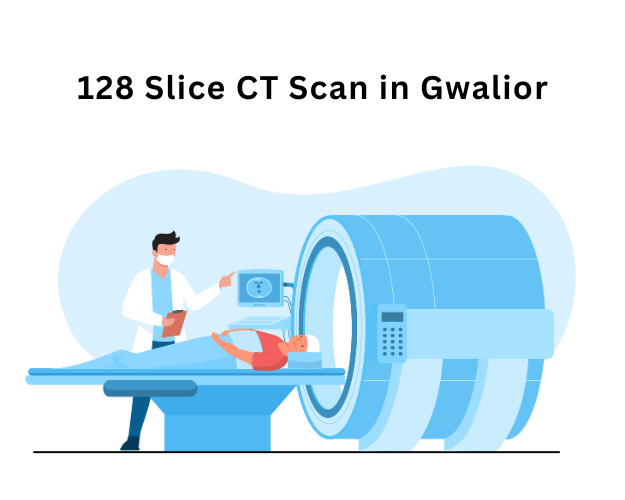
128 Slice CT Scan in Gwalior: Fast, Accurate & Safe Imaging for Better Diagnosis
Dec 17, 2025A 128 Slice CT Scan in Gwalior offers precision imaging that helps doctors detect heart disease, strokes, trauma injuries, and tumors quickly and accurately. For families in Gwalior looking for advanced diagnostics without traveling far, local hospitals and diagnostic centres now provide world-class 128-slice CT technology that reduces scan time and improves diagnostic clarity.
What is a 128-slice CT scanner and why it matters
A 128-slice CT scanner collects 128 thin cross-sectional slices in a single rotation and reconstructs them into high-resolution 3D images. Compared to older CT units, the 128-slice system delivers faster acquisition, shorter breath-hold times for cardiac scans, and finer detail for small structures — making it especially useful for coronary imaging and acute stroke assessment. Clinical reviews show 128-slice CT angiography provides high diagnostic performance for coronary artery disease.
Benefits of getting a 128 Slice CT Scan in Gwalior
1. Speed: Most scans finish in seconds, enabling faster emergency decision-making.
2. High resolution: Sub-millimetre slices allow detection of subtle lesions or vessel stenosis.
3. Lower motion artifacts: Faster rotation and detector arrays reduce motion blur—important for cardiac and trauma patients.
4. Local access: Gwalior hospitals and diagnostic centres now offer 128-slice imaging, saving travel time for patients and families.
Common uses (Who should consider this scan?)
1. Cardiac CT / Coronary CTA — to evaluate coronary artery disease and calcium scoring.
2. Stroke imaging — CT angiography and perfusion studies to guide acute stroke therapy.
3. Trauma & emergency care — whole-body CT for rapid trauma assessment.
4. Cancer staging and follow-up — precise localization and monitoring of tumors.
5. Complex abdominal, chest, and orthopedic cases where detailed anatomy matters.
What to expect during the procedure
1. You’ll be asked to lie on the scanner table.
2. Technicians position you and may give an IV for contrast when needed.
3. The scanner rotates around you for a few seconds to minutes depending on the study.
4. The radiologist interprets images and issues a report.
Most routine CT protocols are completed quickly and comfortably with minimal preparation. For safety questions on radiation exposure, hospitals follow dose-optimization protocols recommended by radiology societies.
Safety & radiation — what patients should know
CT uses ionizing radiation. While diagnostic CTs typically fall in the range of ~1–10 mSv depending on the study, modern 128-slice scanners include dose-reduction technology and protocol optimisation to keep exposures as low as reasonably achievable (ALARA). Discuss pregnancy, prior scans, and pediatric needs with the radiology team—experts and accrediting bodies emphasize dose monitoring and justification of each CT exam.
Choosing the best CT scan center in Gwalior
1. Ensure the facility lists a 128-slice CT in its equipment list.
2. Check for NABL accreditation and experienced reporting radiologists.
3. Ask about 24×7 emergency availability if you need urgent imaging.
4. Look for centres that publish dose-management or safety information. Local hospitals like ITM Hospital and dedicated imaging centres in Gwalior are among facilities offering advanced CT services.
FAQs
Q: Is a 128-slice CT scan safe?
A: Yes—when clinically justified and performed with dose-optimized protocols; discuss individual risks with your radiologist.
Q: Do I need contrast in CT scan?
A: Depends on the clinical question—your doctor will order a contrast CT if vascular detail or tumor enhancement is required.
Q: How fast are results available?
A: Emergency reports can be ready within an hour; routine reports typically within 24 hours.

