 WhatsApp Us (24/7)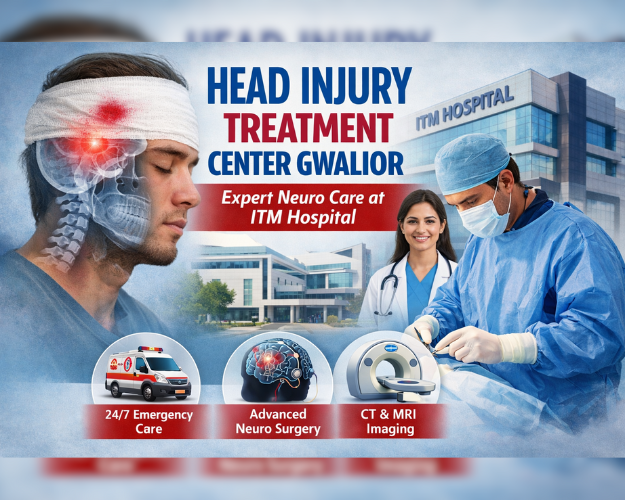
Head Injury Treatment Center Gwalior: Expert Neuro Care at ITM Hospital
Feb 06, 2026If you’re searching for a reliable Head Injury Treatment Center in Gwalior, you’ve come to the right place. At ITM Hospital & Research Centre, Gwalior, we understand how critical timely, expert care is for head injuries — whether due to a fall, accident or trauma. With specialist neurosurgeons, round-the-clock neurocritical care, state-of-art diagnostics and rehabilitation services, we stand ready to help patients and families through every stage of recovery.
In this post, we explain why choosing a dedicated head-injury center in Gwalior matters — and how ITM Hospital’s Neurosciences department sets the standard.
Why a Dedicated Head Injury Treatment Center Matters
A head injury — also called a traumatic brain injury (TBI) — occurs when an external force impacts the head, causing potential disruption to brain function. This may result from a vehicle crash, fall, sports injury or assault.
Even when there is no visible “bump” or external wound, internal damage can occur. That’s why prompt assessment, proper imaging, and specialist care are critical.
Without appropriate neuro-trauma care, patients risk long-term disability, cognitive issues, or worse. A hospital lacking neurosurgery, neuro-ICU, imaging and rehab units can miss critical early interventions. That’s the gap a true head injury center fills.
What Makes ITM Hospital the Go-To Head Injury Center in Gwalior
At ITM Hospital & Research Centre, Gwalior, the “Institute of Neurosciences” is designed to manage head injuries — from emergency to rehabilitation.
Key strengths
a. 24×7 Emergency & Neurocritical Care: Immediate response for brain & spine trauma, with ventilators and ICU support.
b. Advanced Diagnostics: CT scans, EEG and other neuro-diagnostic tools for accurate detection of bleeds, swelling or structural damage.
Neurosurgery & Spine Trauma: Able to manage cranial injuries, surgical decompression, skull-fracture repair or other interventions as needed.
c. Holistic Neuro-Rehabilitation: Physiotherapy, occupational therapy, speech therapy — ensuring long-term recovery and quality of life.
d. Patient-Centric Care: Tailored treatment plans, compassionate support, and follow-up care under one roof.
Understanding Head Injury: What the Treatment Pathway Looks Like
Treatment for a head injury depends on severity. Here’s a simplified breakdown:
1. Emergency Stabilization
a. Secure airway, ensure oxygen & blood flow, stabilize blood pressure.
b. Immediately immobilize cervical spine if needed (especially if unconscious or neck injury suspected).
2. Imaging & Diagnosis
a. Perform CT scan or MRI to assess bleeding, brain swelling, fractures.
b. Use neurological assessment (Glasgow Coma Scale — GCS) to classify injury severity.
3. Medical or Surgical Management
a. Mild head injuries may only need rest, observation and pain relief.
b. Moderate-to-severe injuries often need ICU monitoring, intracranial pressure control, anti-seizure drugs, or surgery to evacuate hematomas or decompress skull.
4. Rehabilitation & Long-Term Care
a. Early rehabilitation — physiotherapy, cognitive therapy, occupational therapy — improves long-term outcomes.
b. Continued monitoring for complications such as seizures, cognitive changes, or behavioral issues.
By integrating all these phases under a single roof, centers like ITM hospital help reduce delays, improve coordination, and enhance recovery chances.
Choosing a Head Injury Treatment Center in Gwalior: What to Look For
When selecting a center — whether for yourself or a loved one — keep these factors in mind:
1. 24/7 neuro-trauma & emergency services (accidents can happen any time)
2. Availability of CT/MRI and neuro-ICU for immediate diagnosis & care
3. Team of neurosurgeons, neuro-anaesthetists, ICU specialists and rehabilitation therapists
4. Comprehensive rehab under one roof (physiotherapy, speech, occupational therapy)
5. Clear communication and family support — because head injury recovery is a long journey
In Gwalior, one option that meets all these criteria is ITM Hospital — making it a strong candidate when quick, expert action matters most.
Frequently Asked Questions (FAQ)
Q: Is every bump or fall dangerous enough to visit a head injury center?
A: Not necessarily. Mild injuries without loss of consciousness, vomiting, confusion, or other worrying symptoms may only need rest and home monitoring. However, if there’s any loss of consciousness, severe headache, repeated vomiting, slurred speech, or imbalance — it’s wise to seek expert neuro evaluation.
Q: What kind of treatment does moderate-to-severe head injury need?
A: It may require intensive care, brain pressure monitoring, anti-seizure medication, or neurosurgery to relieve pressure or remove blood clots — followed by careful rehabilitation.
Q: How soon should rehabilitation begin after a head injury?
A: As soon as the patient is stable — early rehabilitation (physio, speech, cognitive therapy) often leads to better outcomes and reduces long-term disability.
Q: Can head injury lead to permanent disability?
A: Yes — depending on severity, delayed treatment, or complications like brain swelling or repeated injury. That’s why prompt specialized care in a neuro-trauma center is critical.
Q: Where can I find a head injury treatment centre in Gwalior?
A: One of the leading choices is ITM Hospital & Research Centre, Gwalior (address: NH-75, opposite Sithouli Railway Station, Gwalior 475001). Call +91 9090191963 / 64 to book an appointment or for emergency care.
What You Should Do Next
If you or a loved one in Gwalior has suffered a head injury — don’t wait. For expert neurosurgical care, neuro-ICU support, diagnostics and rehabilitation, call ITM Hospital & Research Centre, Gwalior at +91 9090191963 / 9090191964.
Alternatively, visit the Neurosciences section on the hospital website to book an appointment online today.

