 WhatsApp Us (24/7)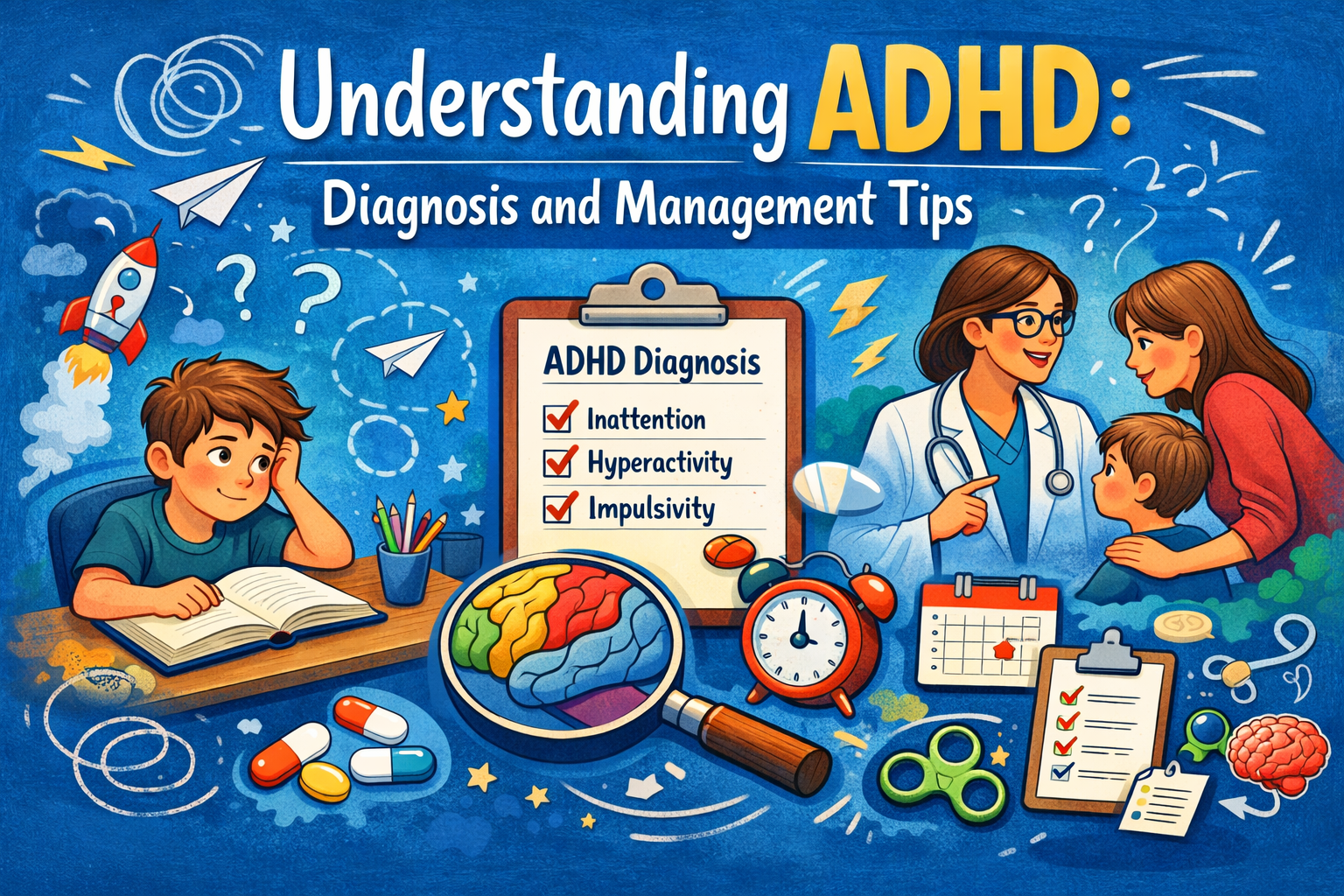
Understanding ADHD: Diagnosis and Management Tips
Feb 07, 2026Attention-Deficit/Hyperactivity Disorder, commonly known as ADHD, is a neurodevelopmental condition that affects millions of children worldwide and often persists into adulthood. Despite its prevalence, many parents and caregivers still struggle to understand what ADHD actually is, how it’s diagnosed, and how best to support children living with it. In this comprehensive guide, we will walk you through the core aspects of ADHD — from its definition and symptoms to diagnosis patterns and practical management tips that can make a meaningful difference in a child’s daily life.
Definition
At its core, ADHD is a behavioral condition characterized by persistent patterns of inattention, hyperactivity, and impulsivity that interfere with functioning or development. Unlike typical childhood energy or short attention spans, ADHD involves symptoms that are more frequent, severe, and disruptive than what we would expect for a child’s age and developmental stage.
According to guidelines used by healthcare professionals globally, diagnosis is based on observations of behavior rather than blood tests or imaging. Clinicians rely on criteria specified in manuals such as the DSM-5, requiring a child to show a certain number of symptoms across settings — like home and school — for a diagnosis to be considered.
Importantly, ADHD is not caused by poor parenting or lack of discipline. It reflects differences in brain development and function that affect attention regulation and impulse control.
Symptoms
Recognizing ADHD symptoms is an essential first step toward helping a child. While every child may exhibit inattentiveness, fidgetiness, or occasional impulsive behavior, it becomes concerning when these behaviors are consistent, appear in more than one environment, and disrupt everyday functioning.
ADHD symptoms typically fall into two broad categories: inattention and hyperactivity-impulsivity. Inattention includes difficulties sustaining focus, following instructions, and organizing tasks. A child may seem easily distracted, forget details, or struggle to complete schoolwork. On the other hand, hyperactivity-impulsivity might be visible as constant motion, excessive talking, interrupting others, or difficulty waiting one’s turn.
Symptoms can vary by age and context. Younger children may be more noticeably restless, while older kids might more often feel mentally restless and struggle with planning. Additionally, ADHD presents differently in girls and boys; boys are more likely to exhibit overt hyperactivity, whereas girls may show subtler signs, like inattentiveness.
Prevalence of ADHD
ADHD is one of the most commonly diagnosed neurodevelopmental disorders in childhood. Rigorous studies estimate that about 5.3% of children globally meet strict diagnostic criteria, with rates that have remained relatively consistent across regions when standardized procedures are followed.
However, clinical diagnosis rates can vary. Some data indicate higher observed diagnosis frequencies, which may reflect broader recognition by healthcare systems as well as differences in diagnostic practices. Boys are diagnosed more than twice as often as girls, though this gap may partly result from under-recognition of inattentive symptoms in girls.
While ADHD commonly begins in childhood, symptoms and difficulties can continue through adolescence and adulthood. Some people experience significant life impact well beyond childhood, though coping strategies and supportive treatments often help manage challenges effectively.
Patterns in the Incidence of ADHD Diagnoses Among Children
The patterns of ADHD diagnosis reflect both biological and social influences. Historically, boys are more likely to be diagnosed than girls, which may be partly due to girls’ symptoms being less disruptive and therefore less noticeable in settings like the classroom.
Cultural and socioeconomic factors also play a role. Research suggests that diagnosis rates can vary by region, ethnicity, and access to healthcare. There’s evidence that children from lower-income families or certain demographic groups may be under- or over-represented in diagnosis statistics due to systemic differences in screening and awareness.
Modern lifestyle factors — like increased screen time and changes in daily routines — have also been associated with rising concerns about attention problems among children, prompting schools and caregivers to pay closer attention. Observational reports and recent studies highlight that evolving habits and environmental factors may influence how ADHD symptoms present and how quickly they are recognized.
While patterns continue to evolve with research and awareness, one consistent finding remains: early recognition and support greatly improve outcomes for children with ADHD.
Onset Age
ADHD symptoms typically become noticeable in early to middle childhood. According to expert sources, symptoms often begin before age 12 and can be seen as early as age 3 in some children.
However, that does not mean every restless or inattentive child has ADHD. It’s normal for young children to have short attention spans or periods of high energy — this only becomes a concern when symptoms are persistent, inappropriate for developmental level, and significantly interfere with school, relationships, or daily functioning.
Parents and teachers often spot early warning signs in preschool or early elementary years, but full assessment may occur later if symptoms worsen or begin to disrupt academic performance. Clinicians look for patterns over time, not isolated incidents, to differentiate between typical behavior and ADHD.
Management of ADHD in Pediatric Patients
While there is no cure for ADHD, many management strategies help children thrive. These can include behavioral approaches, educational support, lifestyle adjustments, and, when appropriate, medication.
Behavioral Interventions: Early intervention often focuses on structured routines, clear expectations, and consistent reinforcement of positive behaviors. Parent training in behavior management equips caregivers with strategies to support their child’s focus and reduce conflict. Classrooms may also adopt specialized techniques, such as seating arrangements that minimize distraction or breaking tasks into smaller steps.
Therapeutic Support: Psychosocial therapies — including cognitive-behavioral therapy and social skills training — help children learn coping mechanisms, improve self-regulation, and strengthen interpersonal relationships. Counseling can also support families in navigating challenges and reinforcing effective routines at home.
Educational Strategies: Schools play a vital role in supporting children with ADHD. IEPs (Individualized Education Plans) or 504 plans in certain systems help ensure accommodations such as extra time on tests, modified assignments, or a quieter workspace.
Medication: For many children, especially older school-aged kids, stimulant and non-stimulant medications prescribed by a healthcare professional can help reduce core symptoms of inattention and impulsivity. These medications are carefully monitored for effectiveness and side effects.
Holistic Supports: Healthy sleep, balanced nutrition, and physical activity contribute to better overall functioning. Some families find that mindfulness practices and routines — such as regular breaks and predictable schedules — help children organize their day more effectively. All these strategies work best when tailored to the child’s individual needs and strengths.
Current clinical practice guidelines emphasize a multimodal approach — combining behavioral strategies with medical management where appropriate — because this comprehensive support tends to lead to the best long-term outcomes.
When to See a Doctor
If you notice persistent patterns of inattention, hyperactivity, or impulsivity that affect your child’s school performance, relationships, or daily routines, it’s important to seek professional evaluation. Early consultation can help rule out other causes and begin a tailored support plan.
Concerns that warrant medical evaluation include frequent difficulty sustaining attention, inability to complete tasks, trouble following instructions, or impulsive behavior beyond what peers display. Symptoms should appear in more than one setting — for example, both at home and at school — to support ADHD evaluation.
Your first point of contact can be your pediatrician, family doctor, or a child psychologist. These professionals can conduct structured assessments, gather information from parents and teachers, and possibly refer your child to a specialist, such as a developmental-behavioral pediatrician or child psychiatrist, for further evaluation.
Remember, early assessment is not about labeling a child, but about understanding their challenges and equipping them with tools and support to succeed academically, socially, and emotionally.
Conclusion
Understanding ADHD involves recognizing that it is a real and well-studied condition with specific diagnostic criteria and evidence-based management strategies. By learning about its symptoms, prevalence, and patterns, parents and caregivers can better navigate the journey from concern to support. With early recognition, consistent management, and compassionate care, children with ADHD can build resilience and unlock their potential in both school and life.
FAQs
1. What exactly is ADHD?
ADHD, or Attention-Deficit/Hyperactivity Disorder, is a neurodevelopmental condition characterized by patterns of inattention, hyperactivity, and impulsivity that are more severe and persistent than typical childhood behaviors. These symptoms must be present across multiple settings (such as home and school) and interfere with daily life to qualify for a diagnosis.
2. Is ADHD a real medical condition?
Yes. ADHD is classified as a recognized disorder in the Diagnostic and Statistical Manual of Mental Disorders (DSM-5), the authoritative guide used by clinicians to diagnose mental health conditions. It is not simply a label for normal behavior challenges.
3. Can adults have ADHD too?
Absolutely. ADHD can persist into adulthood, and adults can also be diagnosed even if they were not diagnosed in childhood, as long as several symptoms were present before age 12 and continue to affect functioning.
4. How is ADHD diagnosed?
There is no single lab test for ADHD. Diagnosis is based on a clinical evaluation by a trained professional using the DSM-5 criteria, which includes symptom checklists, behavior rating scales, interviews, and information from parents and teachers. Symptoms must be present for at least six months, occur in more than one setting, and impair everyday functioning.
5. What are the main types of ADHD?
ADHD can present in three forms:
• Predominantly Inattentive Type — mainly challenges with focus and organization.
• Predominantly Hyperactive-Impulsive Type — marked by restlessness and impulsive behaviors.
• Combined Type — a mixture of both sets of symptoms.
6. What causes ADHD?
The exact cause isn’t known, but evidence points to a combination of genetic and environmental factors. A child’s genes, brain structure differences, and prenatal exposures (such as tobacco or alcohol) are believed to contribute.
7. How common is ADHD?
ADHD is one of the most frequently diagnosed behavioral disorders in children and affects both males and females, though boys are often diagnosed more commonly, possibly due to more outward signs of hyperactivity.
8. What’s the difference between normal childhood behavior and ADHD?
Many children exhibit inattentive or energetic behavior at times, but in ADHD these behaviors are persistent, inappropriate for the child’s developmental level, and disruptive across settings. Simple restlessness or occasional forgetfulness doesn’t mean ADHD.
9. Are there tests for ADHD?
Formal ADHD assessment can include standardized rating scales, structured interviews, and observation, but there’s no single definitive medical test. Rating scales like ASRS and other structured assessments help professionals measure symptom severity.
10. Can screen time cause or worsen ADHD?
While screen time itself doesn’t cause ADHD, studies suggest increased use of social media and digital distractions may worsen attention difficulties or contribute to behaviors that resemble ADHD symptoms.
11. How is ADHD treated?
Management usually combines behavior strategies, lifestyle support, school accommodations, and sometimes medication. For preschool-aged children, behavior therapy is often the first approach, while older children may benefit from medication plus therapy.
12. Can lifestyle changes help with ADHD?
Yes. Routines, healthy sleep habits, structured environments, physical activity, and supportive educational strategies all contribute to better daily functioning and symptom management.
13. Will my child outgrow ADHD?
Some children see gradual improvement with age, but many continue to experience challenges into adolescence and adulthood. Early diagnosis and tailored support can improve long-term outcomes.
14. When should I talk to a doctor about ADHD?
If a child’s symptoms — like persistent inattention, frequent impulsivity, or high activity levels — are affecting school performance or relationships across settings, you should consult a healthcare professional for evaluation. Early support leads to better coping and development.

